

RALPH Loop vs. Google Antigravity: How a $2.4 Billion Acquisition Validated the Simplest Idea in AI Automation
The year is 2026, and a bash script just proved smarter than an entire generation of “smart” AI agent frameworks.
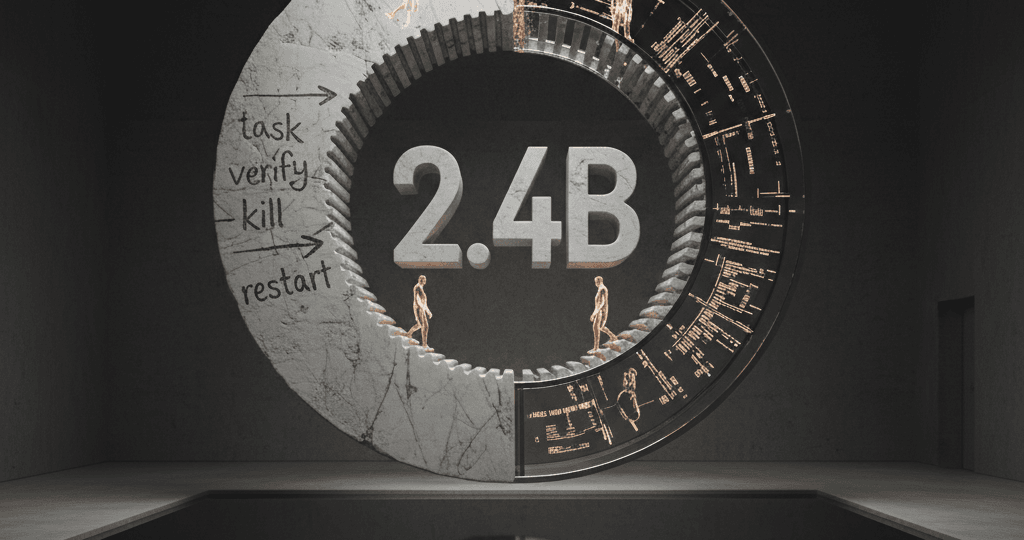
Welcome to the RALPH Loop era – where killing your AI agent and restarting it fresh turns out to be better than letting it think for hours. Google just paid $2.4 billion to prove it. And one catastrophic security disaster just showed us what happens when you skip the guardrails.
I. The Bash Script That Launched a Thousand Agents
December 2025: A developer named Geoffrey Huntley shares a simple bash script with the world. Not a framework. Not a platform. A bash script. He calls it “Ralph Wiggum” after the Simpsons character who just keeps going, oblivious to past failures.
The concept is almost insultingly simple: Stop trying to have one long conversation with an AI. Kill it and restart it for every task.
while true; do
  # Start fresh AI agent
  # Read task from checklist
  # Complete one task
  # Mark it done
  # Kill the agent
  # Loop
done
That’s it. That’s the revolutionary idea.
Within days, the pattern goes viral. Developers who’d been wrestling with complex agent frameworks, fighting context windows, and debugging hallucinations suddenly realize: the dumb solution works better than the smart one.
Why “Ralph Wiggum”?
Because like the character, the agent doesn’t remember its past mistakes. It doesn’t get confused by long histories. It just wakes up, sees what needs doing, does it, and exits. Clean slate, every time.
The viral moment wasn’t just about the code – it was the collective realization that we’d been overthinking autonomous agents for years.
II. The Core Pattern: Stateless Iteration with External State
Let’s strip the RALPH loop down to its fundamentals, because understanding this pattern is critical for everything that follows.
The Basic Loop:
- Write your tasks as checkboxes in a file – Could be markdown, JSON, a spreadsheet, whatever. This is your source of truth.
- Start an AI agent with a fresh brain – No conversational history, no context from previous runs.
- Agent reads the file, picks one task, completes it, marks it done – One task. Not five. One.
- Agent exits – Dies. Terminates. Process ends.
- Script immediately restarts a new agent – Fresh process, clean memory.
- Repeat until all tasks are done – The loop keeps going until the checklist is empty.
Why This Works When “Just Talk to Claude for 3 Hours” Doesn’t:
Context rot: Long conversations accumulate tokens. After 10,000+ tokens of back-and-forth, LLMs start hallucinating, forgetting instructions, and going in circles. The RALPH solution? Never let context build up. Every iteration starts at zero.
Completion verification: Traditional agent workflows rely on the AI saying “I’ve fixed it.” RALPH doesn’t trust that. The loop can run npm test, check file diffs, validate schemas – actual programmatic verification before marking a task done.
AFK coding: Set up your checklist at 6pm. Start the loop. Go to bed. Wake up at 7am to 30 completed tasks, each verified by tests. You’re paying for API tokens instead of your time.
What Makes It “Dumb But Effective”:
No fancy orchestration. No complex state machines. No multi-agent coordination protocols. Just:
- While loops
- File I/O
- Process lifecycle management
The elegance is in what it doesn’t do.
III. Enter Google Antigravity: RALPH in a $2.4 Billion Suit
January 2026: Google acquires Windsurf for $2.4 billion and launches Antigravity, their “agent-first IDE.”
The marketing blitz begins:
- “Multi-agent orchestration platform”
- “Autonomous development environment”
- “Revolutionary agentic workflow”
The reality? It’s RALPH with a really nice UI.
Side-by-Side Comparison:
The “Innovations” That Are Really Just Productization:
- RALPH uses a markdown file → Antigravity uses a visual task dashboard
- RALPH runs
npm testin bash → Antigravity has integrated browser subagents that autonomously test UIs - RALPH is one agent at a time → Antigravity runs multiple agents in parallel
- RALPH is stateless → Antigravity adds “skills” that learn your coding patterns (okay, that’s legitimately new)
The core loop? Identical.
Each Antigravity agent spawns fresh, reads its assigned subtask, executes with tools, validates results, and terminates. The loop continues until the work is done. Antigravity just does it with prettier graphs and parallel execution.
IV. Why This Matters: The Pattern vs. The Product
Here’s what Google’s $2.4 billion tells us about the state of AI tooling in 2026.
What Google Actually Bought:
They didn’t buy the idea – Huntley open-sourced it. They bought:
- The execution: Polished UX that makes RALPH feel magical instead of janky
- The infrastructure: Parallel orchestration, integrated verification, observability dashboards
- The team: Engineers who figured out how to productize the bash script
What This Reveals About AI Agent Architecture:
- The winning architecture is embarrassingly simple – Stateless iteration beats stateful complexity
- The value is in the last 20% – UX, integration points, reliability engineering
- You can build RALPH yourself – Or you can pay $20/month for someone else to maintain it
Antigravity achieved 76.2% on SWE-bench Verified – a benchmark measuring whether AI can actually resolve real GitHub issues. That’s not because the loop pattern is novel. It’s because Gemini 3 Pro is excellent, and the RALPH pattern prevents the model from shooting itself in the foot with context rot.
The pattern is a primitive. The product is what you build on top of it.
V. RALPH in n8n: The Middle Path
You don’t need Google’s $2.4B acquisition. You also don’t need to maintain bash scripts.
n8n already gives you the core RALPH architecture:
- Split In Batches node = The loop (set batch size to 1 for true RALPH behavior)
- AI Agent node (with no memory attached) = Fresh brain per task
- Database or Google Sheet = External state/checklist
- HTTP Request or Code node = Verification gates
When to Build Your Own RALPH Loop:
✓ You have bounded, test-verifiable tasks (lint cleanup, test generation, data migrations, documentation updates)
✓ You’re
This publication is provided for informational purposes only. Gold Root Solutions LLC has made every effort to ensure the accuracy and completeness of the information contained herein, but makes no warranties or guarantees of any kind, expressed or implied. Readers are responsible for their own compliance with legal, regulatory, and ethical guidelines when implementing systems described herein. The publisher and authors disclaim liability for any direct or indirect damages resulting from reliance on the content of this guide. For complete license terms, see Appendix C.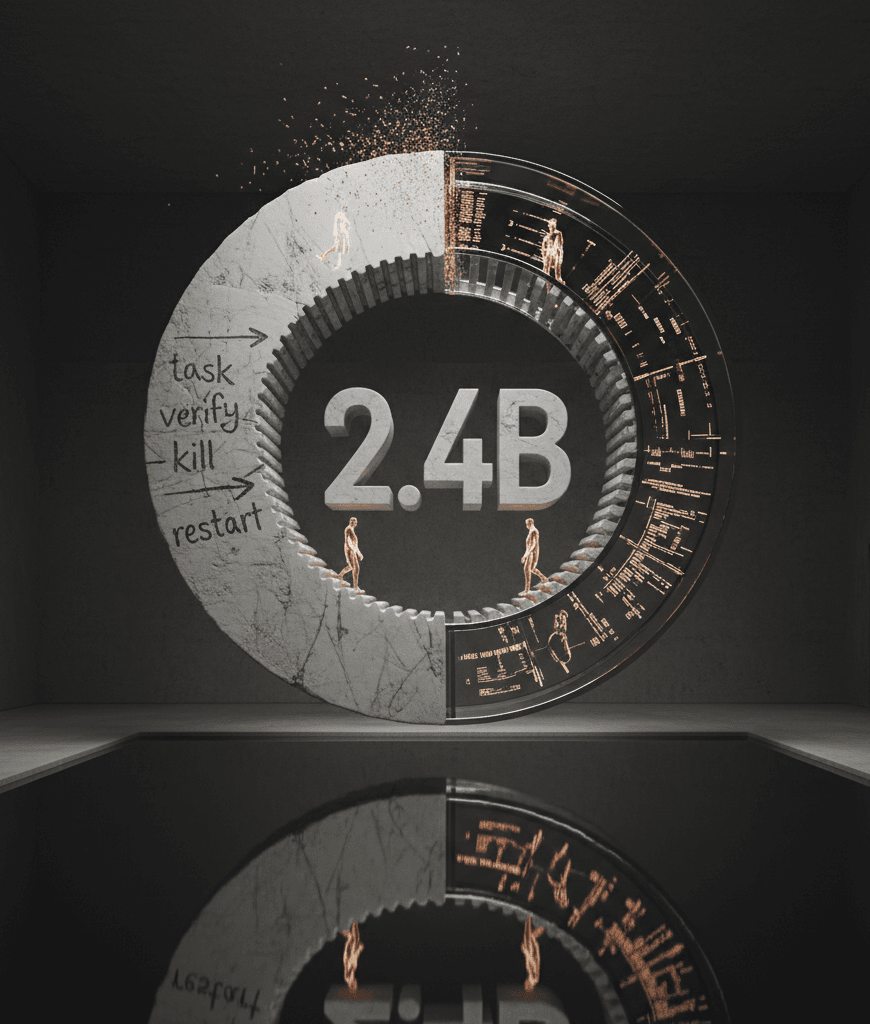
Disclaimer