

The Manatee Machine: How a South Park Joke Predicted the Internet’s Identity Crisis
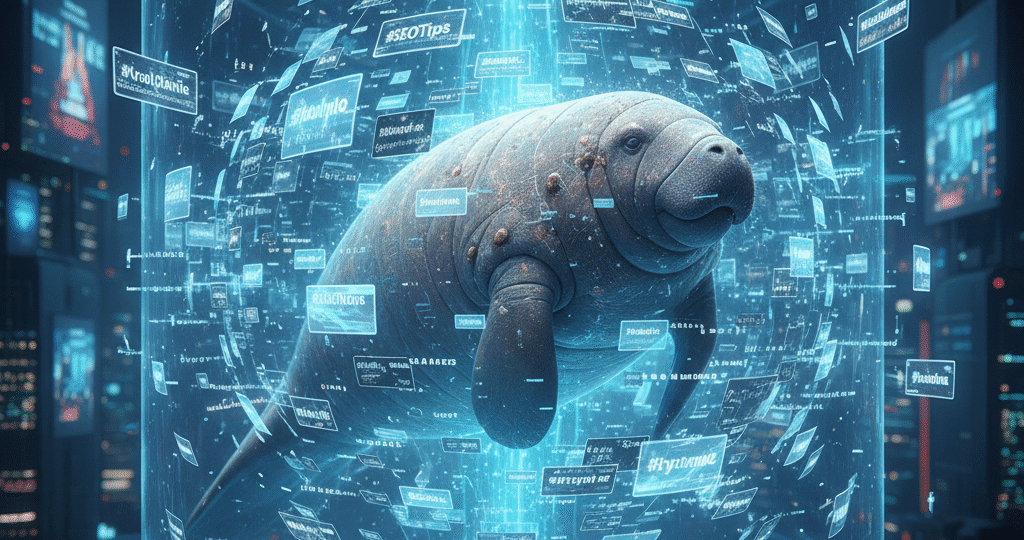
In a 2006 two-part episode called ‘Cartoon Wars’—long before the show’s recent political controversies—creators Trey Parker and Matt Stone revealed what they saw as the lazy, non-sequitur humor of Family Guy by showing its writers’ room: not a team of humans, but a tank of slow-moving manatees. These aquatic scribes would randomly select “idea balls” with words like “Gary Coleman,” “laundry,” and “Mexico” to create their show’s cutaway gags. It was a hilarious, brilliant bit of comedy that perfectly captured a feeling of creative hollowness.
At the time, it was a joke. A fictional jab at a rival show’s writing style.
But today, that fictional joke has become a very real and powerful engine driving the most dominant form of content on the internet, short form video. The “manatee machine” is no longer satire—it’s a sophisticated, data-driven system fueling the content we consume daily. And it’s raising some uncomfortable questions about where our digital world is headed.
The Real-World “Idea Balls”
The modern “manatee” is not a sea cow, but a complex algorithm. And its “idea balls” aren’t random at all—they are the most popular, trending, and highly searchable concepts in the digital zeitgeist.
Here’s how it works in practice: A user searches for “air fryer recipes” on Google. Meanwhile, a viral audio trend on TikTok features someone dramatically sighing. The algorithmic system sees a perfect opportunity and synthesizes these unrelated elements, presenting a content creator with a prompt: “Make a quick, visually appealing air fryer recipe video using the trending sighing sound. Optimize it with the keywords ‘quick meal’ and ‘healthy dinner.'”
This isn’t hypothetical. Search YouTube for “air fryer recipe” today and you’ll find hundreds of nearly identical videos, each following the same formula: dramatic music, quick cuts, trending audio, and SEO-optimized titles like “You WON’T BELIEVE This Air Fryer Hack!” The content creators aren’t lazy—they’re responding to a system that rewards this approach with views, engagement, and revenue.
The process isn’t about artistic vision; it’s about algorithmic optimization. The content creator’s role shifts from pure inspiration to something more functional: being the “human in the loop,” the one to physically execute the machine-generated idea.
The Homogenization Effect
For a time, this system seemed to work brilliantly. It gave creators an endless stream of ideas, helped marketers jump on trends, and kept platforms buzzing with fresh content. What was once a slow, creative process became a streamlined, high-speed assembly line.
But the consequences are becoming impossible to ignore. When you search for “how to fix a leaky faucet,” you’re likely to encounter a dozen articles that begin with identical introductions: “A leaky faucet is not only annoying but can also waste gallons of water and increase your utility bills…” These articles, often generated or heavily templated by AI content farms, follow the same structure, use the same stock phrases, and provide the same basic information—just shuffled and reworded enough to appear unique.
This is the “Dead Internet Theory” manifesting in real time. This theory, first articulated in online forums around 2021, argues that much of the internet has become an “empty and dead” space populated primarily by bots and AI-generated content designed to manipulate algorithms rather than inform humans. When a search for relationship advice yields identical listicles with titles like “7 Signs Your Partner Is Losing Interest (Number 4 Will Shock You!),” the theory finds its evidence.
The authentic, often messy, and genuinely unique content that once defined the early internet—personal blogs, niche forums, individual perspectives—is being buried under an avalanche of algorithmically optimized sameness.
When Search Becomes Meaningless
This brings us to the most serious consequence: the corruption of information itself. When content is optimized not for human value but for algorithmic engagement, our primary tools for finding knowledge begin to fail us.
Consider what happens when you search for medical information. Type “headache remedies” into Google, and you’ll find page after page of nearly identical articles, many clearly generated by AI systems trained on the same medical websites. They cite each other in circular references, creating what researchers call “model collapse”—a hall of mirrors where AI-generated content becomes the source material for more AI-generated content.
The same pattern emerges across topics. Search for “best investment strategies” and encounter a dozen articles with identical advice. Look up “how to start a garden” and find the same basic steps repeated endlessly, stripped of the personal experience and local knowledge that made gardening advice valuable in the first place.
This isn’t just about convenience—it’s about the fundamental reliability of information. When our primary gateway to knowledge becomes flooded with what experts are calling “AI slop”—algorithmically generated content designed for SEO rather than accuracy—we face a crisis of epistemology. How can we trust what we find when we don’t even know if one error in the loop could multiply into a complete breakdown of reliable information – or something even worse? A civilization trying to understand the world through bots playing an endless game of telephone.
The Human Cost
The tragedy isn’t just that we’re drowning in synthetic content—it’s what we’re losing in the process. The internet once felt like a vast library where anyone could contribute their unique knowledge and perspective. A mechanic in Ohio could share hard-won insights about fixing transmissions. A grandmother in Portland could document her family’s recipes with stories attached. A teenager in Mumbai could explain local customs to curious strangers.
That human texture is being systematically stripped away, replaced by content that feels professionally produced but personally hollow. Or, at least pushing real material so far down the optimized results to be invisible to anyone in the real world. We’re trading the quirky, unreliable, deeply human early internet for something more polished but infinitely less authentic.
This is the point where the comedy ends and the consequence begins. We have built an incredible machine for finding information, but we are now feeding it an endless diet of engineered, machine-generated content. We are, in effect, teaching it to lie to us.
The numbers tell the story: 34 million AI images are created daily. Experts predict that 90% of online content will be AI-generated by 2026. Off hand, I have a flashback of Chief Wiggum saying, “No, no, dig up, stupid!” We just keep making the slop.
So, the next time you go looking for something, stop for a moment before you hit “Search.” Picture a room full of manatees, picking from a tank of ideas. Now ask yourself:
The joke that began with a manatee pushing a ball in a tank has become our reality. And we’re still laughing.